Watching a bit of the 2009 adaptation of A Christmas Carol, which I haven’t seen before but its bad… like really bad. Wild to think that Pixar’s Up came out the same year.
Things Become Other Things
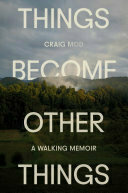
Finished reading: Things Become Other Things: A Walking Memoir by Craig Mod 📚
I slow rolled this one, it took about two months; it was such a pleasure to read I wanted to savoir it but got bitten by then falling out of the habit of nightly reading. Overall, I liked this book. The potent mixture of travel journal and biography combined with hundreds of anecdotes about Japan was right up my alley. At points I felt like Mod waxed on a bit more than necessary. It didn’t feel like filler, I felt that he struggled in points to condense his own thoughts, or that he wanted to convey something extremely pointed. Unable to find the exact notes to hit he danced around it instead. That’s not broadly true but there were segments that fell flat for me. It may just be that Mod comes from such a different background than my own, although I have a lot of empathy for him (which is the mark of good writing), I didn’t always identify with him (the mark of extraordinary writing).
For the photos alone, even the B&W ones in the mass market print this book is worth a read. But that’s true with any number of things about this book, the photos, the tour around the Kii peninsula, the factoids about Japan, I could recommend this book for any number of reasons and would heartily.
The Road Back to You... Do not read this book

Finished reading: The Road Back to You by Ian Morgan Cron 📚.
There is an old expression, “it was a book but it should have been a pamphlet”. This book was an encyclopedia and should have been a business card. From the first page it’s clear that about 90% of the book is going to be filler. It’s charitable to say I read it, skimmed may be a better term. After slogging through 30 pages I realized I was never going to make it through so I just read the descriptions and motivations for the 9 different types. Every page is crammed full of inane anecdotes, flat attempts at humor, and yes, the occasional joke that lands. At some point in the book the author starts listing famous people who are of a specific ennaegram type while providing the disclaimer; “these are just my observations”. This of course gives one pause: how complex is this system if you can watch a few interviews with someone you’ve never met and peg them as a 5? Do I really need to read a whole book on it then? Also one of the famous people listed is, literally, Bilbo Baggins; who I needn’t remind you is not a person!
Writing aside, I tend to lump personality “types” in with horoscopes and birth order, I go into this with eyes open and a healthy dose of skepticism. This was recommended to me by my therapist, in a session, which gave it an order of legitimacy that other “personality tests” don’t have. I do see the value in applying framework and heuristics to human beings, especially ourselves. Although this book is a huge turn off, I wouldn’t want to throw the ennaegram out with the bathwater (and there is so much water in this book). The two page description of each trait was interesting and gave me insight into my motivations. If nothing else this book helped to focus on motivations rather than outcomes. Several months before I read this I took an ennaegram test online but there was too much weight given to what I do not why I do it.
This book though… I read it because my therapist recommended it, professionally. Frankly if I didn’t like her as much as I do, I’d probably never speak to her again.
Today I Learned ~D[2025-12-19]
When I work in Ruby, I really miss the pattern matching of Elixir. Today I discovered a few restructuring tricks for hashes that recreate some of that pattern matching goodness from Elixir. The TLDR is that you can use forward assignment.
options = {one: 1, two: 2, optional: false}
# then later
options => {one:, two:, optional:}

$> one
1
$> optional
false
Note the => rightward operator, aka Ruby’s old friend the hashrocket, this is called forward assignment.
You can make the above more robust with a rescue clause:
options => {one:, two:, optional:} rescue nil
In the event that somebody passes in an options hash like {one: 1, two: 2} this will prevent things from blowing up. When destructuring Ruby will return nil for optional.
Looking through my zsh configs today, all sorts of hidden and forgotten gems. Notably clobberass for recompiling Rails assets:
alias clobberass="rails assets:clobber && rails tmp:clear && rails assets:precompile"
You would think the name would have made this unforgettable!
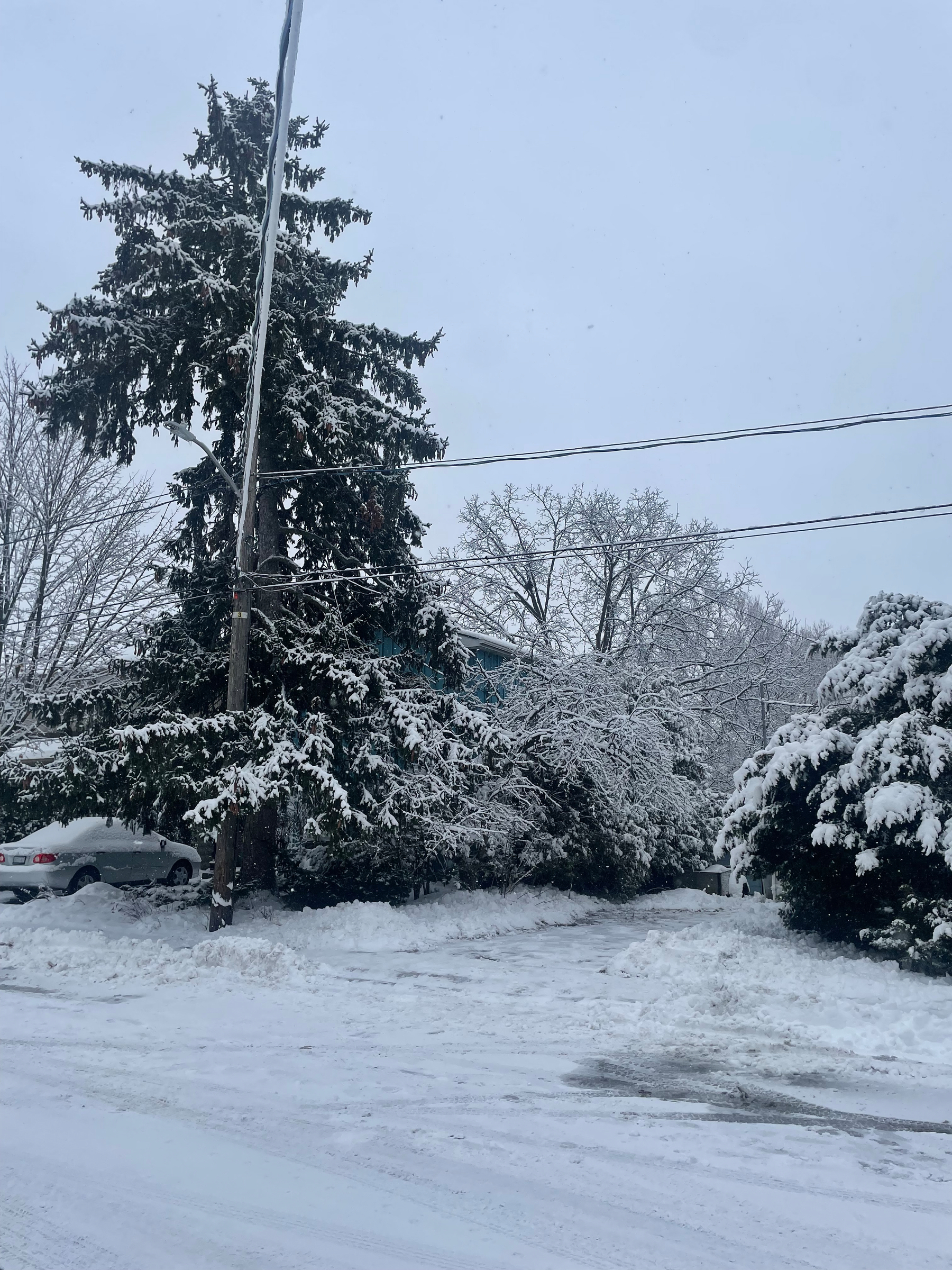
First big snow
Rails: Monkey patching TimeZone logic
I’ve been working with a third party API to import some data, but only if one of the fields effective_date is today or in the past. So with
[ {
    data: {...},
    effective_date: now
  },
  {
    data: {...},
    effective_date: tomorrow
   }
]
the first record will be imported while the second record will be skipped. This is fairly easy to write a spec for, but for a project manager, or a tester who is manually doing experience testing it’s kind of hard to know if the record with an effective date tomorrow is going to import when tomorrow comes.
I’m sure there are libraries for this and strategies but I put together a little monkey patch for this scenario:
module ActiveSupport
	class TimeZone
		def now
			Time.now + 1.day
		end
	end
end
I sent that over to the PM with instructions on where to put it (essentially, anywhere). Now, I realize this is not a good idea, and will likely mess up all kinds of stuff in Rails but for a one off test it worked perfectly and is still faster than signing into the service (which we may or may not have access to) and updating the effective_date.
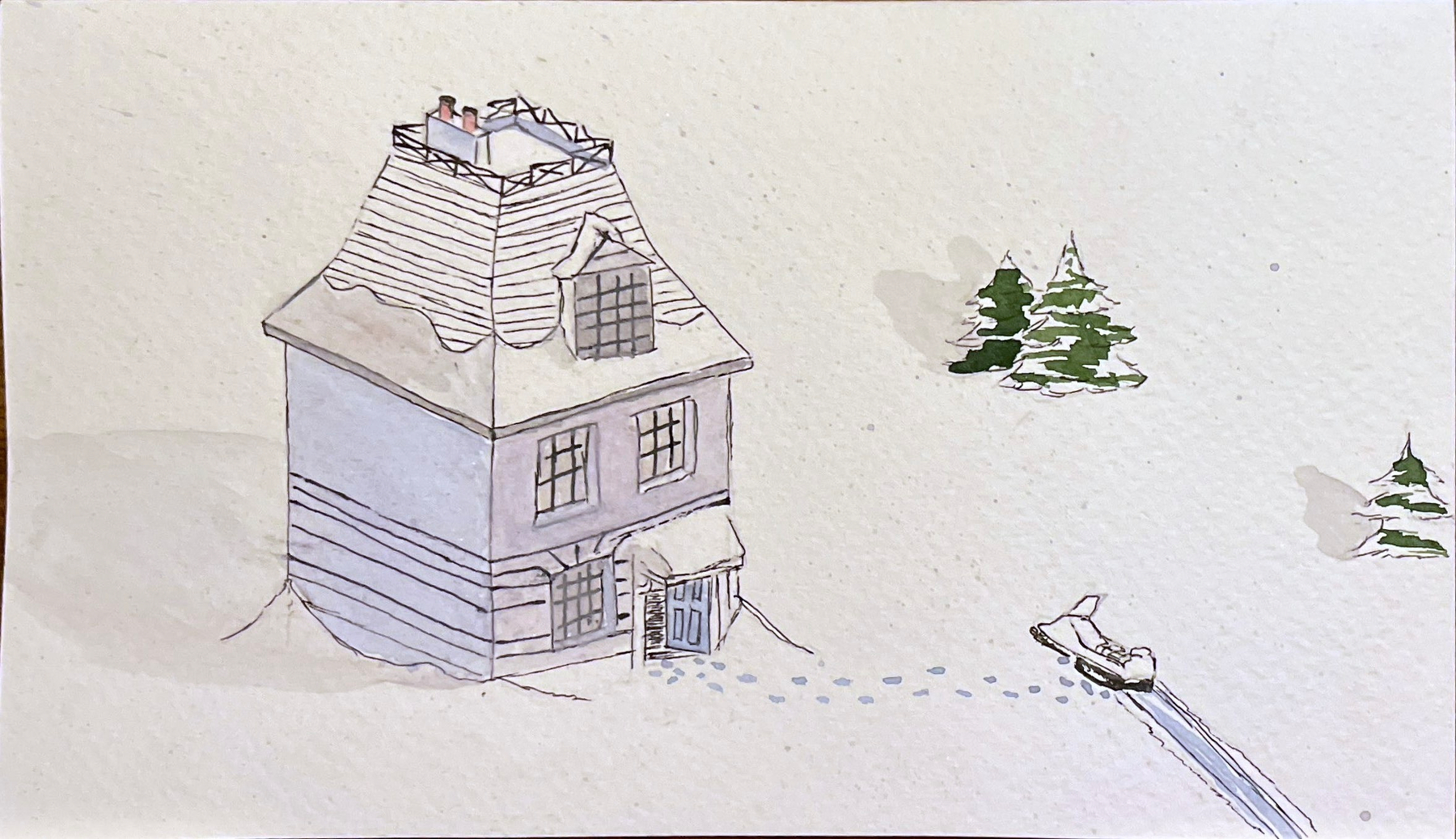
Another Christmas card
Every year I get pumped for Advent of Code. Then however long the first day or two takes me I start to think of all the other things I could/should be doing with my time and it peters from there. Sigh, I love the idea of it, maybe sometime I’ll take a sabbatical in December and dedicate myself to it.
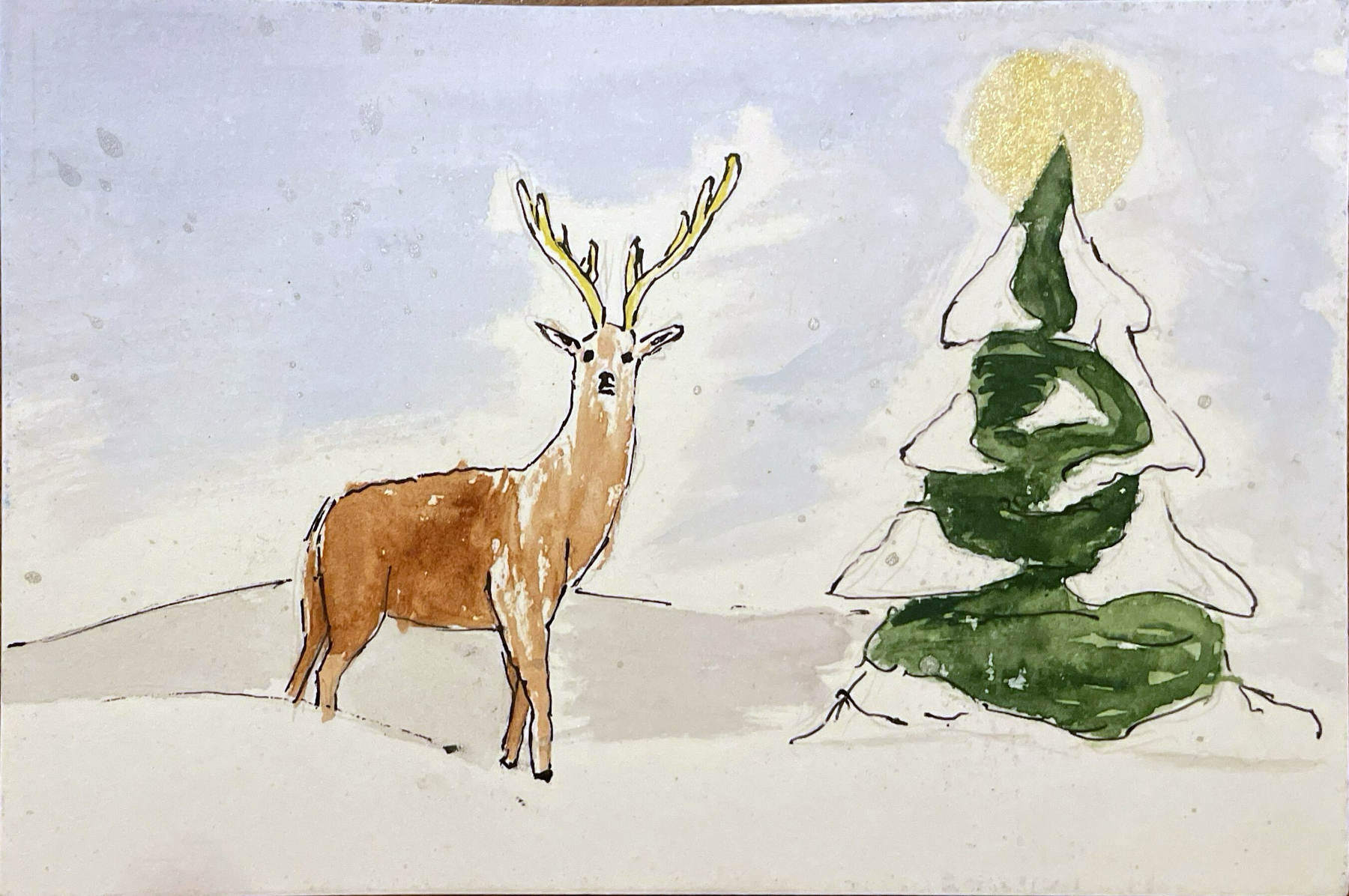
My wife and I have started painting our Christmas cards. I’m a big fan of Owen Pomery’s style, it kind of reminds me of Hergé. I copied this from Victory Point