Katie Zacharia is “stepping down” after 5 days… That’s just about half a Scaramucci for context (anything to not use the metric system).
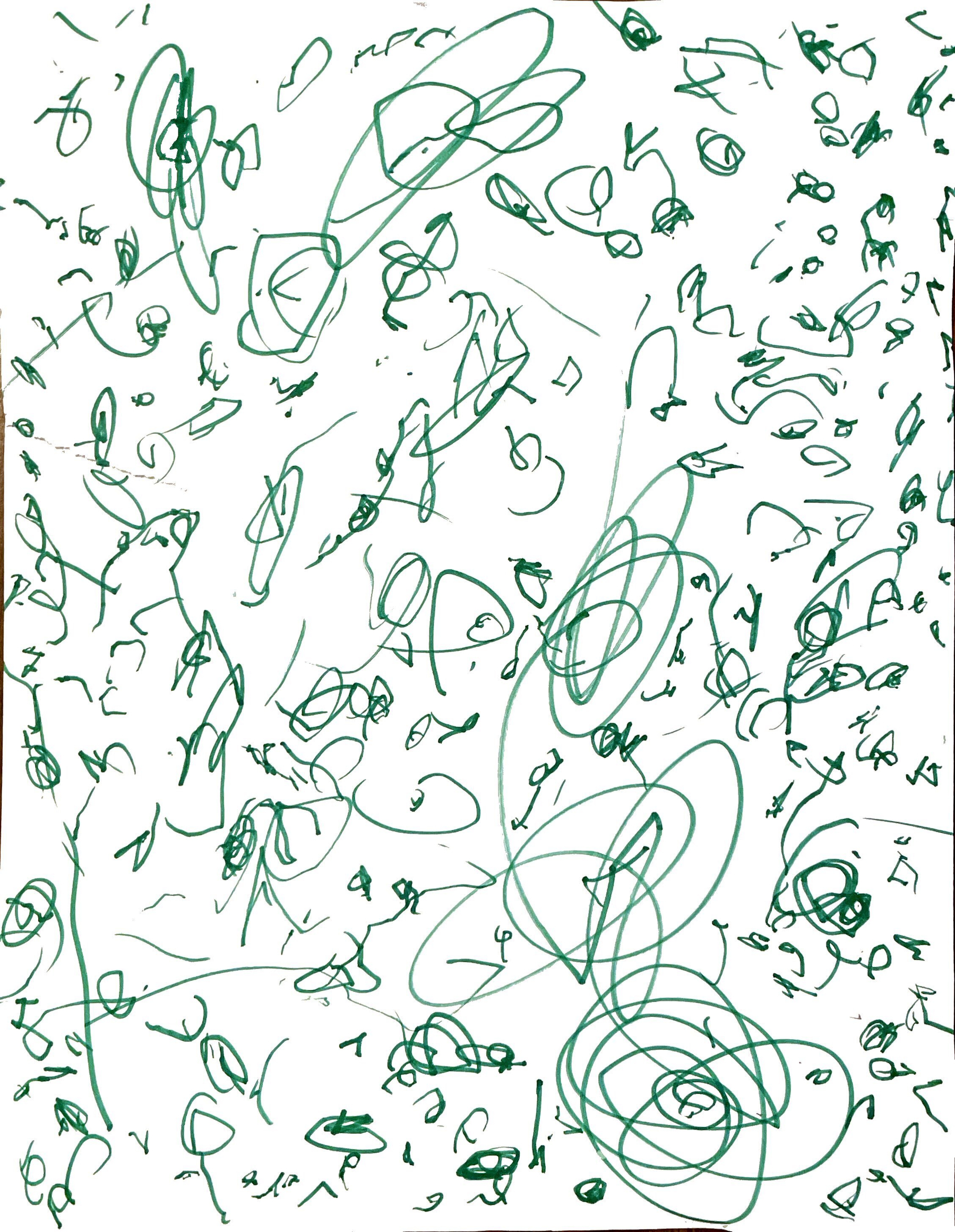
My youngest, who just turned two started doing these drawings. She spends twenty or thirty minutes on each and everything ob the page is something. She will point to a spot: ”thats monkey!” Or ”thats Pumpkin” (our cat). I’m here for it… and the final product is a pretty cool pattern.
Wonder how many commit messages end with some variation of :wq?
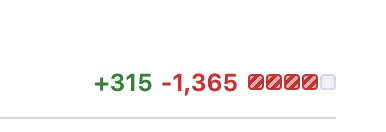
Diffs like this make me proud… Admittedly I also wrote all those 1365 lines; no regrets! They worked in production for about three years, the client switched vendors, the process is more streamlined now my work around was no longer needed.
“I don’t remember signing up for this” is an option, but you did not include “I DID NOT sign up for this” as an option. You must understand, nobody in the history of the world has ever signed up for a mailing list.
Got a notice from Google that my Chrome plugin was removed from the web-store. Which is a bit of a laugh. I wrote it about 8 years ago when I worked at an insurance company, I can’t remember the details but it correctly formatted pasted URLs from various policy documents. That is to say, niche.
Something something research, working for things, instantly gratified by shit
I accidentally stumbled across the OpenAI store not because I wanted too it was a link chain I followed blindly (don’t be mad!) I couldn’t help but notice that the hucksters at OpenAI are selling a $40 t-shirt with the words “Good Research Takes Time” which is not only sadly ironic but also tone deaf. The people who are working tireless to destroy or reasoning abilities, think for us, and remove any kind of academic inquiry or curiosity about the world are loudly proclaiming “good research takes time”. I mean I agree but it seems antithetical to their entire brand.
I gotta stop going on Linkedin, sometimes I genuinely want to see what a colleague is up to or I need to post something I’m working on (speaking at a conference this fall gotta rep it). My feed is now, essentially 100% rage bait, the unhinged toxic “rise and grind” people are out of control and somehow it’s all I’m shown!
Where to go from here…
For the past 25 years, 71% of my life, computers have been a daily thing for me. When I was a teenager I spent countless hours drawing, animating, and “programming” ActionScript in Flash, later those energies were channeled into editing films in Final Cut Studio, building websites tinkering with HTML, CSS, and PHP.
Much of my university work was done on the computer and yet I still came home, sat down, and “forced” myself to learn Ruby and Rails. Although, forced is not the word it was fun. Yes it was hard and frustrating but the reward was worth it, the dopamine hit of figuring something out made the hours of frustration worth it.
For nearly seven years now I’ve made writing Ruby, Elixir, JavaScript, and others my career, I’ve done it all day long, and still had an insatiable desire to work with these technologies oitside of work. Of course having a wife and children, volunteering, and living some semblance of a “balanced” life always slowed my pace. I didn’t finish as many side-projects as I wanted, learn as many new languages as I wanted, open-source contributions were virtually non-existent but to the extent life allowed I was using the computer in one way or another almost all the time. If it wasn’t programming, it was writing, or making art. I think it would have been unfathomable for me to conceive of a career not centered around a computer.
Within the last six months this has shifted dramatically. I clock out on Friday at 4 or 5 and I’m happy if I don’t have to open the lap-top until 8 AM on Monday morning. Three day weekend? All the better. My total lack of enthusiasm actually hinders pursuits totally unrelated to programming or the web, I’ve been working through a first draft of a novel for a while; since it’s on my computer, I have no real desire to work on it on the weekends. I’ve joked with my wife about getting a typewriter so I can do some creative writing.
What shifted? AI. AI has made my job as a programmer totally meaningless, but it’s not just my fun job where I get to solve problems. It also means that I take a lot less enjoyment in discovering and using other people’s software. Whether or not it was built with AI is sort of academic at this point, knowing that it could be taints the entire idea for me. Sure there are some incredible apps out there still being written by hand by talented developers who are, in most cases, ethically opposed to AI (as they should be) but it doesn’t really matter. AI has proven too good at creating great apps easily and cheaply, code and therefore the programs it compiles to is just fairly meaningless.
Years ago when the enigmatic Rubyist Why the Lucky Stiff abruptly quit programming he parted with some words which have haunted me my entire career:
programming is rather thankless. u see your works become replaced by superior ones in a year. unable to run at all in a few more.
I couldn’t help but think about that quote anytime I questioned whether or not I was doing something meaningful with my life. However, I used to be able to tell myself, I’m not building something beautiful, curing cancer, or making art but I’m making useful tools that people use to get their job done. Moreso, I’m fortunate, I’ve gotten to work for non-profits, government organizations, sustainable packaging companies and I think the secondary effects of my work actually have made an impact in the world.
These days, increasingly clients can just ask an AI “make a cool marketing website to educate people about recreating safely in the mountains and avoiding avalanches” it means that all my efforts are not only going to be “replaced… in a year” as Why said. Not perhaps “replaced by superior ones” but replaced by ones that we have collectively called “good enough” to the point were companies and organizations are willing to spend hundreds of thousands of dollars on “tokens” to do this when they used to spend that on “developers”.
What am I even doing now? What am I for? More broadly, if the internet is going to be produced by AI agents, I don’t see any reason to hang out there.
Speaking at BEAM Europe
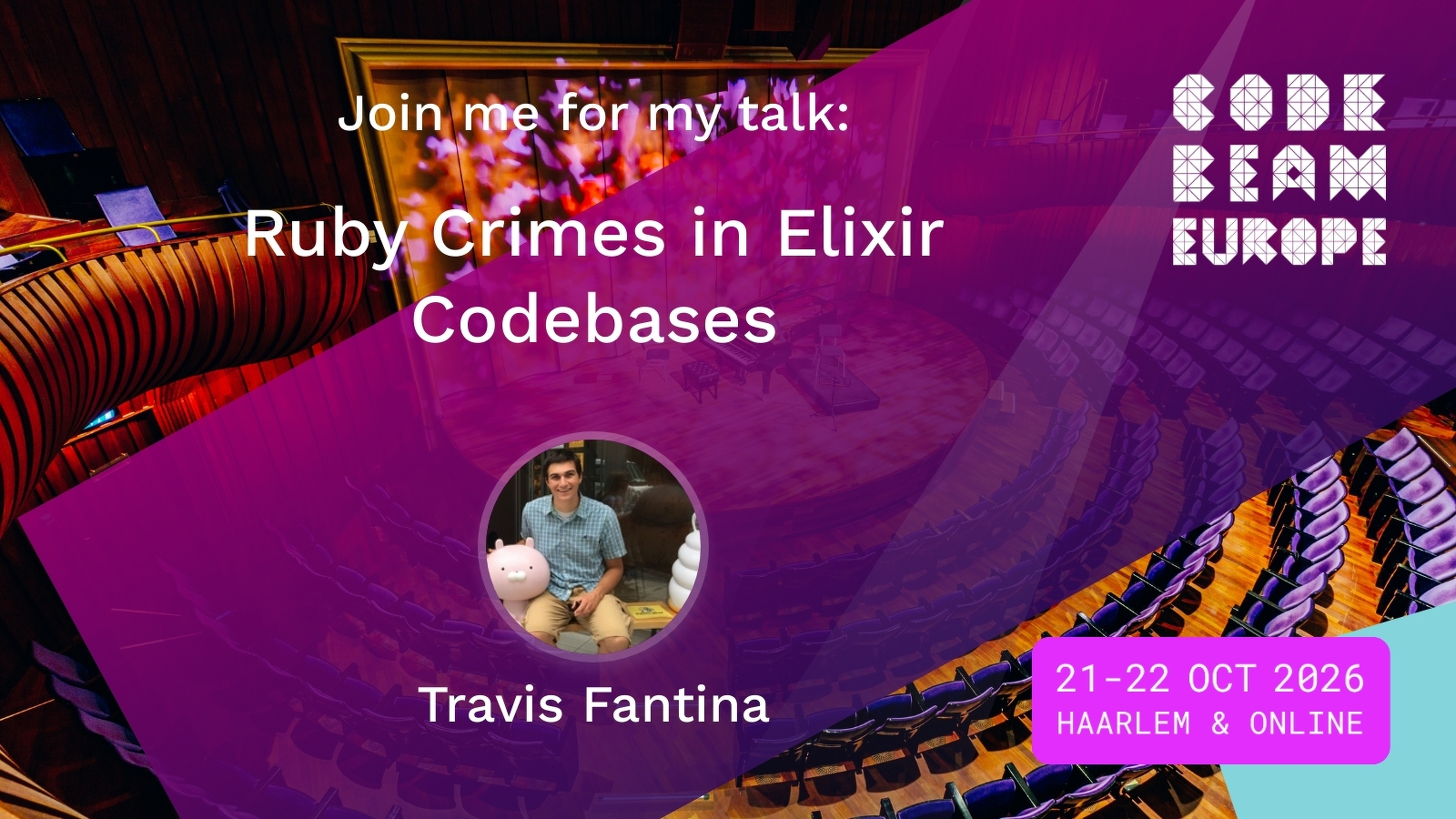
I’m excited to announce that I’ll be speaking at BEAM Europe in October. Would love to see you there and/or if your in the greater Haarlem area, happy to meet up!
Tickets are on sale now over at https://codebeameurope.com/ . Drop into my session if your interested in looking at how Ruby/OOP patterns can sneak into Elixir code bases when first adopting Elixir and how to refactor/avoid these.