
Posts in "musings"

Olympic Logos

I’m no lover of the Olympics but the branding behind them fascinates me (see 99pi Mexico 68). This morning I stumbled across some hate for Utah 2034 and all I could do is shake my head; to be an Olympic Logo designer, what a thankless job in it’s time. I think the general trajectory of an Olympic logo is this:

  1. Unveiling: everyone hates it and loudly proclaims this
  2. Lead up to the games: through repeated exposure the image is rehabilitated in people’s minds
  3. Immediately following the games: people mostly have positive associations with it
  4. Legacy: this is where the timeless/iconic nature of the logo is actually proved. Will people remember it in 30 years? 50 years?

In general people hate new logos, anytime a company changes their logo there is going to be backlash which is why, it’s best to just keep moving forward and ignore the chatter for a few months. The Olympics are unique because the logo (and associated iconography) for each games is both a “brand new” logo but it’s also an iteration or a “redesign” of all previous logos. Of course, Utah is not Vancouver, or Turin but when people see this logo their mind is going to think of those logos and do, likely, the same thing it would for a corporate rebrand.

Personally, I think Utah 2034 is dope. Although, I might have skewed something in the A or H to avoid the 4 leaf clover look they’ve got going on.

Utah 2034 Olympic Logo

Thank you NYC

I’m pretty disillusioned with the state of US politics; but last night gave me a great deal of hope. Specifically Zohran Mamdani’s victory in NYC. It underscores something I’ve been feeling (and trying to practice) for the past year; the key to political success lies in local government. As individuals we have almost no control over who the president is; we have a bit more influence on senators and governors but at a local level within our cities individuals can exert a great deal of control. Of course NYC is a bit of an anomaly because of it’s size but in any city or town anyone can get involved by calling their city counselors, campaigning for what they believe in. It’s a sad fact but local politics have such low levels of engagement that it only takes a few phone calls for a city counselor to prioritize an issue. If we all focused less on national politics and put our efforts into making our home towns more equatable, safer, more affordable, et al. our impacts would be multiplied.

I firmly believe in the grassroots idea that making our hometowns better will create an upwards momentum at a state and, eventually, national level. People need to feel safe, healthy, and happy in their hometowns and if they do they won’t need to vote for strongmen.

The NYC Primary

It’s been a rough couple of weeks in world news. A lot has been going on that I’ve felt moved to comment on but haven’t had the heart to actually write it down. Zohran Mamdani’s victory in the NYC primary is a ray of sunshine in otherwise very dark times. It’s a powerful reminder that progressives can win even against massive entrenched interests. In the final weeks of the race billionaires and powerful centrist democrats such as Bill Clinton were pouring millions of dollars and coveted endorsements, respectively, into Cuomo’s campaign in what amounted to an attack on Mamdani. The attack failed. The voice of the people could not be silenced. Big as New York is, on the scale of everything else going on in the world this is kind of small potatoes, but a win for progressives anywhere is a victory for progressives everywhere. I’ll take it.

Canada Post Strike

Canada Post Strike

Photo by Birk Enwald

For the past few weeks postal workers in Canada have been on strike. This has, of course, caused a fair amount of disruption during the Christmas season. Before I even knew the details of the strike I was naturally on the side of the workers. This is my default position: support labour. In general, I have found that if you are on the side of labour you’re on the right side of history. That’s not to say there aren’t corrupt unions, pointless strikes, or strikes that are regressive in their outcomes. However, in general strikes are a way for “the means of production” to get more of the benefits of that production. In other words; the people doing the work should be reaping the biggest rewards. Not the government, not billionaires, not some mythological “job creator” who took some risks a few years ago and has sat around collecting a “passive income” ever since. No, labor deserves the wealth, because they are the ones creating it.

The arguments against strikes have always been a bit baffling to me. There is no multi-millionaire union. The picket line almost always represents the low and middle class. These are our people, and they deserve more for what they do. Even highly paid people, in my view, deserve more for what they do. In Ontario it’s taken for granted that public teachers are “highly paid”. OTF, the Ontario Teachers Federation is very powerful and well monied. So what are these rich teachers making? After 10 years salaries appear to be capped at $102,000*. Great money for a single person, maybe more than you make, maybe more than you take home but I would ask; “why not more?” Teachers work damn hard, long hours, lots of stress and there is the years-long grind of even becoming a full time placed teacher in Ontario. Not to mention these are people who spend as much time with your kids as you do! Yes, I also think you should make more money, but it’s not a zero sum game; that’s kind of the point of unions. We are living through a time when the wealth gap looks more like France before the revolution; the middle class is shrinking and not because families are getting rich. A “high paying” job ten years ago may barely get you by; but billionaires own more than ever. In the past 25 years the world’s billionaires have added six trillion to their collective wealth. Anybody, any union, who takes a stand is fighting for all of us not just their workers.

Sure it’s an inconvenient time for a strike, but spare a thought. You may not get all your Christmas packages in time, but there are workers who literally cannot make ends meet 365 days a year, not just at Christmas. Strong labour is good for society as a whole!

The UW Encampment

UW Encampment

I’ve been watching with admiration and humility as students around the world have set up encampments demanding their schools disclose and divest from Israeli/defense industries. While the situation in Palestine has been gut-wrenching; it’s been heartening to see the reactions of these brave students. Media coverage, however; has been less than favorable. Even fairly pro-Palestinian outlets such as The Guardian use incendiary language such as, “protest erupted” and the emphasis is generally on the concerns of the administrators, police, and potential safety issues. My reading of this coverage portrays these student activists, at best, as dangerous anarchists looking for a fight, at worst entitled white kids shirking summer internships.

The encampment is covered in art and slogans! Advertising for the people by the people.

When the encampment went up at the local university, The University of Waterloo, I rode up with my dad to take a look. He brought a few books to donate to the encampment’s library (I found it charming that amid the tents and living space the students had already set up a thriving library). The atmosphere was calm and cordial we were offered snacks and there appeared to be a lecture circle going on next to the library.

I found the atmosphere so tranquil and invigorating (a mix of being back at school and a yoga retreat). It was so enticing I went back the next day with Viv and Ruby. The entire day was planned out (they communicate their donation needs and the daily program via Telegram), we went for kite making and poppy planting - kid friendly activities. Ruby got right to work painting her kite, as parents Viv and I relish any time Ruby spends on her own working on a project so we sat back and tried not to hover. The care and concern that was shown for our daughter was remarkable. Over the course of half an hour multiple people approached her offering her water (it was very hot), a woman came around with bite brownies and asked if Ruby wanted one and if she was allowed. As the sun moved I helped a volunteer move the tent to provide better shade for the kids. This was a scene from a community picnic not an anarchist commune sizzling to the point of boiling.

A few from in front of the Grad House. As I watched the care and compassion shown towards my daughter as well as everyone else who had come to the encampment that day I couldn’t help but wonder why this wasn’t reported? Why is the media so hell-bent on making these students, out to be a volatile and potentially dangerous element? It’s a tired trope. Of course there have been violent incidents, counter protesters, police forcibly removing students there are many echos of the 1970 Vietnam protests but from my experience an average day in the encampment is calm, communal, even jovial at times. Everyone is gathered for a higher purpose, and it is a grave one, but even in the face of this genocide a community is being built and it is thriving. My hope is that their time is shortened only by divestment and not batons.
A view from in front of the grad house.Slogans cover the encampment: advertising for the people by the people

On “Rewilding The Internet”

A wild place my daughter and I found in West Vancouver I’ve been hearing this term a lot lately and, frankly, I think it is a fairly myopic view. If you live in a walled garden such as Facebook, Instagram, TikTok, The Artist Formally Known as Twitter, etc. then yes, it’s easy to the feel that the internet is a barren hardscrabble where all efforts must be made to conserve even the tiniest shrub of originality. However; simply peaking over these walls will reveal a vast untamed wilderness waiting to be discovered/rediscovered.

My internet experience began around 2000 when I got a @hotmail email. I could barely read and write but there it was: email. A few years later I learned to type and to type fast by chatting with both friends and strangers on AIM. It was around 2003 or 2004 that I really started to “be online” and it coincided with my learning a bit of HTML. Here was this thing you could do at home without talking to anyone, lobbying anyone, going through gatekeepers; you could put it online and anyone in the world could see it.

When people talk about a wild internet I think this and everything that came before is the era most people are talking about. It was a bit of a wild-west, there were few best practices, and even those were contested and debated. Fewer people were there for the money. Of course the dot-com bubble had already burst so it’s not like people weren’t aware of the potential to make large fortunes on the internet, but there wasn’t a lot of pressure on the individual to make money. People wrote blogs because they had something to say, or because they had nothing to say but wanted to shout into the void. People learned HTML not to become developers but because they had a passion for something and needed to get that thing online. People dumped snippets into Geocities forms to create weird and wonderful pages. Later, even MySpace; the closest thing to the era’s Facebook, allowed users an insane amount of control over the look and feel of their profiles. It was a little messy, but it was wild.

Gmail and Google Maps had yet to be released, MySpace was nascent, and while there were were other social network prototypes they didn’t “capture” users the same way they do today. Social networks, these silos, just weren’t compelling enough to spend hours a day on. So you surfed. How did one surf? People had blogrolls which guided you to their favorite blogs. There were director pages and recommendations. Much like wandering a library rather than approaching a librarian directly one spent a lot more time aimlessly wandering.

Eventually Google et, al. got so good you didn’t need to rely on third parties for recommendations, you didn’t need to browse as much, you could type in a query and get a result. The results were so good that you didn’t even need to go past the first page, and within a few years you didn’t need to get past the first result. At this stage it may feel like something was lost, that weirdness, those early sites, where did they go? Was the internet finally tamed?

They were still there.

At first the algorithm was designed to return useful results. This was, in large part, a worthwhile step. It disenfranchised a lot of the wild and weird internet but it made the place as a whole a lot more easy to juice. Answers were now literally at your fingertips, not several blocks away.

That’s when the enshittification began. Enshittification, coined by Cory Doctorow, is the process by which platforms die:

  1. They begin by being good to their users
  2. Then they begin to abuse their users to make things better for their business partners
  3. Then they abuse their business partners to gain more value for themselves/shareholders
  4. Then they die

As Google became less of an experiment in finding things and more of an engine for making money the search experience began to slowly degrade. More and more of the first results were advertisements, those advertisements became less and less relevant to the query. Additionally, anyone trying to “rank” highly in the Google search results had to play by their rules. We’ve seen several iterations of Page Rank’s bizarre rules from link stuffing (where pages would put an insane number of links to related/the same content), to the latest trend where long-form content is rewarded. (This is why you have to scroll through someone’s life story to get to the recipe).

We were so hooked on the search that we barely noticed that the experience was degrading! Searching was so easy and the results were still so good that we put up with more ads, more invasions on our privacy for worse results. And all of this algorithmic gaming to make Google as much money as possible continued to cut out the weird and wonderful websites that made the original internet wild.

But they were still there.

The latest trend in search is AI. For two years I used a web browser called Arc, early this year with much fanfare they released an iOS app for search with an accompanying video about the future of the internet. Their vision is to have you type in your query, and have AI search for you and return a generated answer to your query. The pitch is, “no more searching, no more sifting through bad results”. Ironically, search has become so bad we need AI to do the most basic thing it’s there for. Perplexity AI and and a host of others are promising the same thing. This is not a net positive for the internet. If you are interested in re-wilding the internet you need to do more hunting not less. An AI that promises generative answers to search queries is far worse for the health of the internet than Google’s crappiest results, it is eliminating sources, content, experts, humans and anything else that might make the internet weird. This is a dark and dangerous path for a wild internet.

But the wild internet is still there. You can’t find it in walled gardens, get rid of Facebook, jump ship from Instagram and stop looking for answers with Google. You will never find the wilderness if you remain in the concrete jungle. Where is the wild internet?

It’s everywhere entrenched tech isn’t. I realize that’s a bit daunting, so where to start? That’s a huge question and it deserves a huge answer. As I write this blog I’m sure I’ll dive into more detailed answers but below I’ve provided a few of my favorites as a jumping off point:

Marginalia Search is a small DIY search engine experiment that focuses on non-commercial sites you didn’t know existed.

Kagi is a bit more mainstream, you get 100 searches for free/month after that it’s about $10/month. Mostly relying on Bing and other search providers it strips most of the cruft from these services. Kagi is powerful because you can create your own rankings and filters, what do you want to see? What do you want to see more of? Tired of StackOverflow? Rank it low. Like The Guardian. Rank it high.

IndieWeb is a wealth of knowledge on the wild internet and a good place to start learning.

Micro.blog imagine Instagram, Twitter, and Tumblr rolled into one also with podcast hosting. Micro blog is an easy way to get thoughts out of your head and into the world along with a supportive and interesting community. As is required with an open internet, there is no lock-in everything is transportable and it connects seamlessly with several “walled gardens” so you can cross post to Threads if you wanted.

The Useless Web it is what it says it is.

RSS I believe that RSS is one of the most powerful tools we have in the wild internet. RSS deserves a post in it’s own right but give a high level overview here. RSS stands for RDF Site Summary or better yet Really Simple Syndication. RSS lets you subscribe to feeds and receive an update every-time new content is added. This allows you to curate your own experience for online reading, no algorithms, you choose what you want and posts are shown in chronological order. You’ll need an RSS reader; I use NetNewsWire but other good options are FeedBin (paid) and The Old Reader (free), I believe Vivaldi has one out of the box as well (Safari used too 😢). Once you have a reader you start adding feeds, most content that gets updated regularly will have an RSS feed it can usually be found by adding /rss or /feed to the end of the url. You can try this here on my site!

A few of the feeds I read regularly are:

Those are just a few general interest ones to get you started. I’ve curated about 30 that feeds that I actively follow some people have just one or two others have hundreds.

If you’ve made it this far, I sincerely thank you. If you have questions about the open internet, RSS feeds, or anything else please drop me a line; hi@travisfantina.com

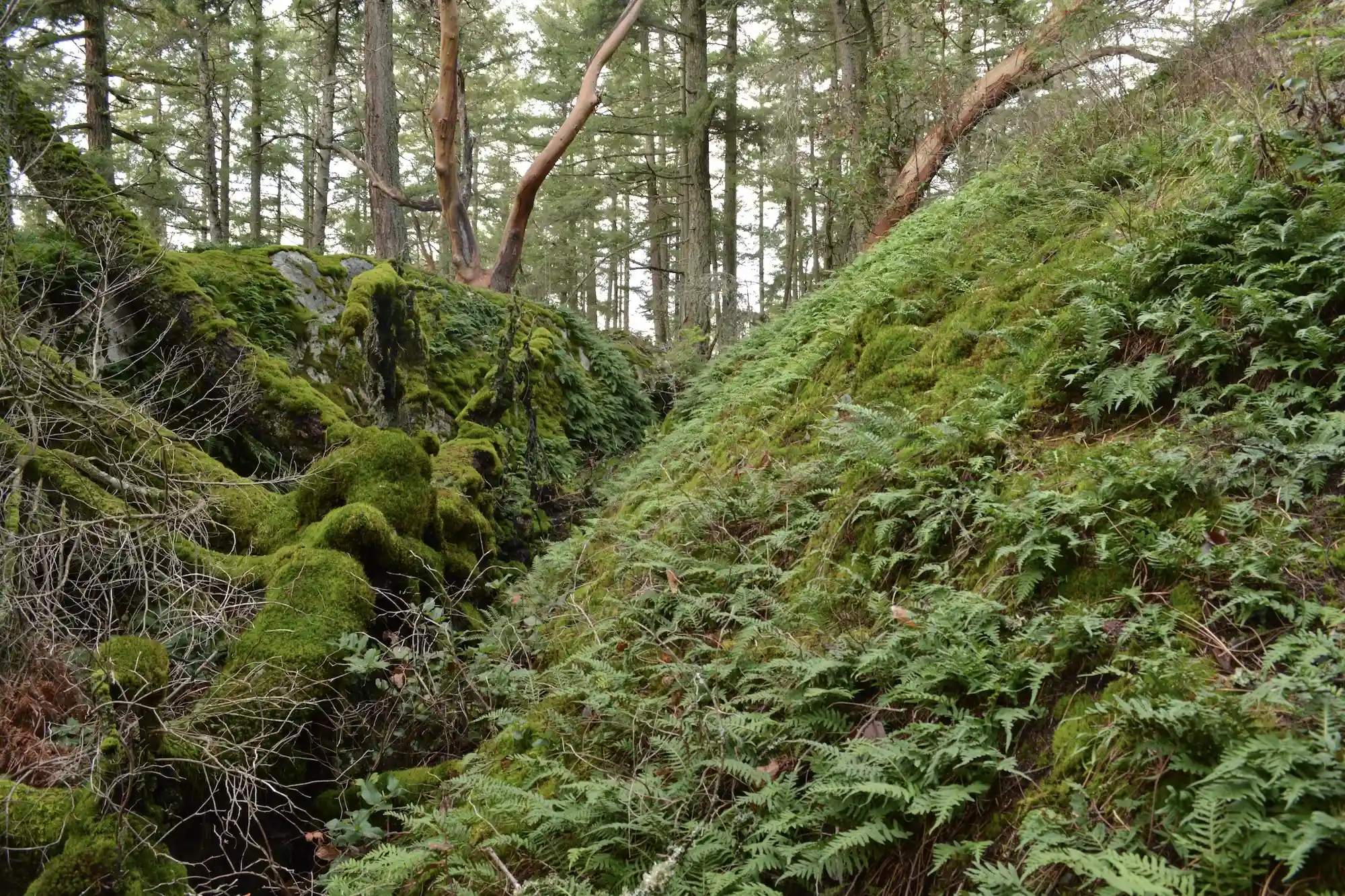
A wild place my daughter and I discovered in West Vancouver